TL;DR
I was the editorial manager for this Smart Family travel special, which was one of 19 publications I ran throughout my career. I handled everything from the initial brainstorming and pushing management for a radical cover design, to coordinating a team of over 30 people and closing the finances at the end of the month.
Stack I Used
• Project & Financial Tracking: Microsoft Excel (I built custom editorial planners, deadline trackers, and budget sheets from scratch here)
• Communication: WhatsApp, Email, and phone calls (Since expensive team apps weren't realistic for us in Nepal, I kept everyone aligned manually)
• Design Oversight: Adobe InDesign (I know my way around the software enough to map out layouts, fit text, and review the design team's progress)
The Journey
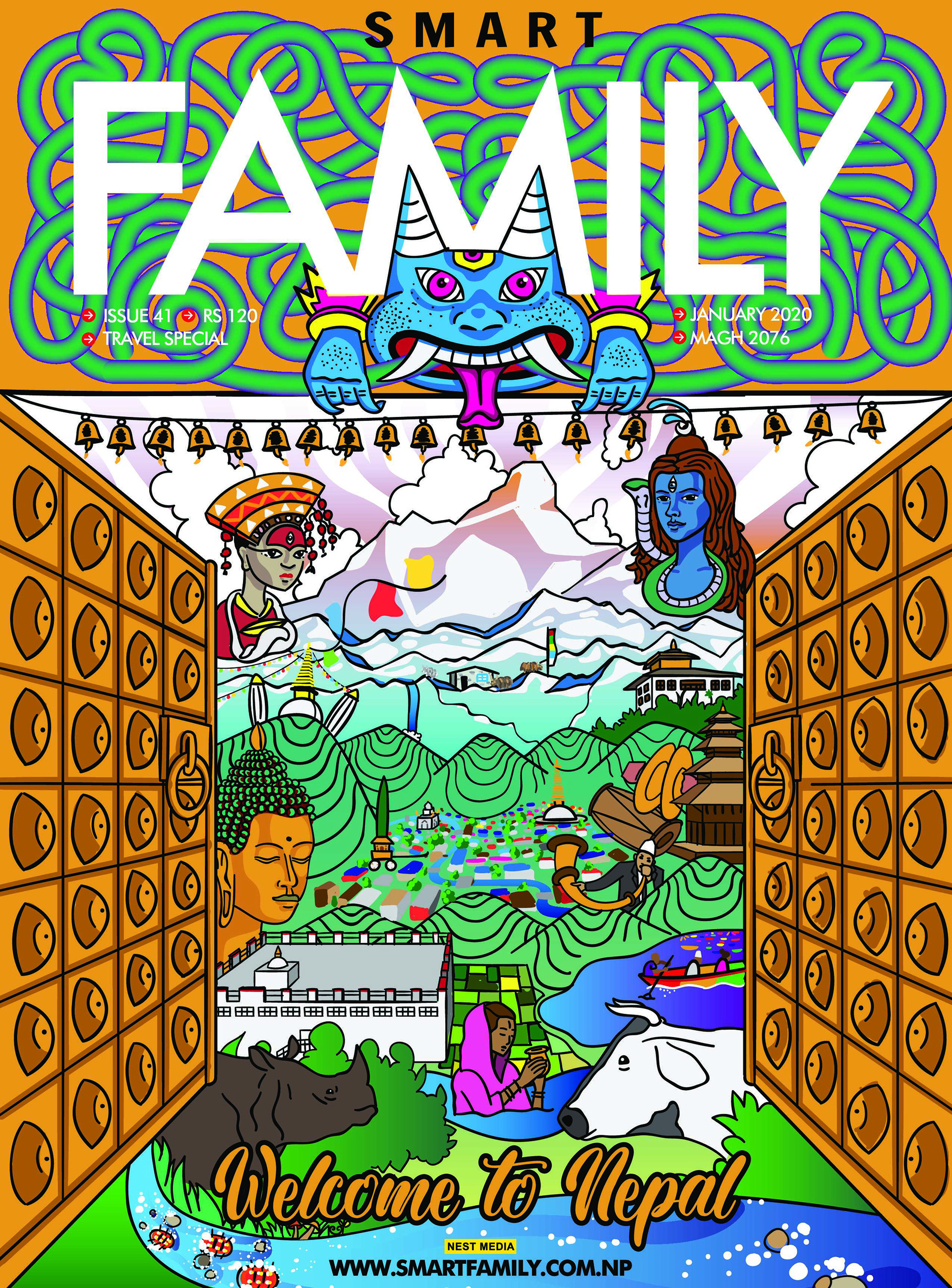
For this Visit Nepal Year special, I really wanted to step away from standard travel photography and try something completely different. The idea actually came together in a casual tea shop meeting with an artist friend, Sudim. I told him: “VNY is about Nepal opening its doors to the world. Let’s show a temple gateway guarded by Chhepu to ward off evil, opening up to simple, vibrant scenes of our mountains, hills, and plains.” Pitching a fully illustrated cover to upper management was an uphill battle because it broke the mold, but I fought hard for it because I knew it would stand out on the stands.
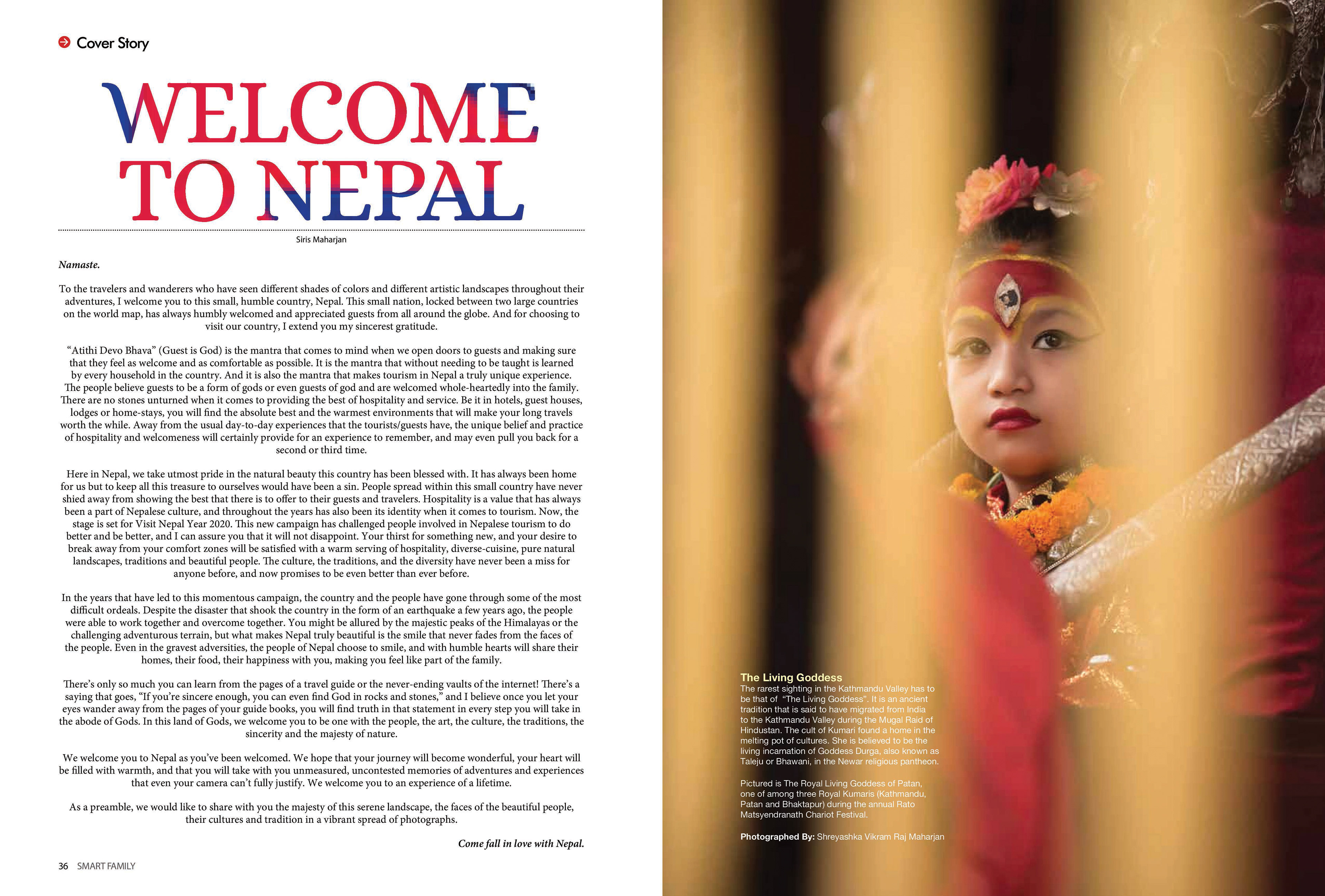
A monthly magazine has a lot of moving parts, and managing this issue meant keeping a massive puzzle on track under a strict print deadline. I directly led our core internal team of 7 and coordinated between 20 and 30 outside contributors, writers, and photographers. For the main cover story, I worked closely with our senior writer, Siris—who is an incredible writer—and gave him a simple brief: acknowledge where we’ve been as a country, write an open invitation to explore, and make people want to turn the page.
My job wasn't just about the creative direction and reviewing layouts in InDesign; I also had to carry the financial responsibility. I was accountable for closing the monthly book, which meant balancing our production budget, handling freelancer payouts, and making sure our creative risks made sense financially. Seeing how proud the team was when the issue finally dropped, and knowing we actually turned heads in the industry, makes this one of the most rewarding projects out of the 19 books I've closed.
Learning
Going against the grain is exhausting, but that's usually where you make something memorable. Looking back, I’m incredibly proud of how happy this issue made my team, though I do wish I had the business vocabulary back then to show management the strategic value of our creative ideas instead of just fighting them with blunt passion.